
Hancock County Traffic Warrants Explained
Traffic trouble in Hancock County usually begins with a citation. Under Iowa Code section 805.5, willfully failing to appear on a citation is a simple misdemeanor, and the court then directs that an arrest warrant be issued. The clerk passes the warrant and the original or electronic citation to the issuing agency, which handles enforcement. Once an arrest happens, both the cited offense and the nonappearance get addressed together. That is the formal path, though. Not every late payment or missed date produces the same warrant, because the statute governing the charge and the court record control what follows. Hancock County publishes no traffic-warrant-only search, list, form, bond schedule, or recall process, so the public route starts with the case or citation rather than any claimed complete warrant list.
Search Hancock County Citation Records
The Iowa Judicial Branch traffic FAQ explains how to review a charge in Hancock County, use Iowa Courts Online, contact the clerk, and pay through official channels.
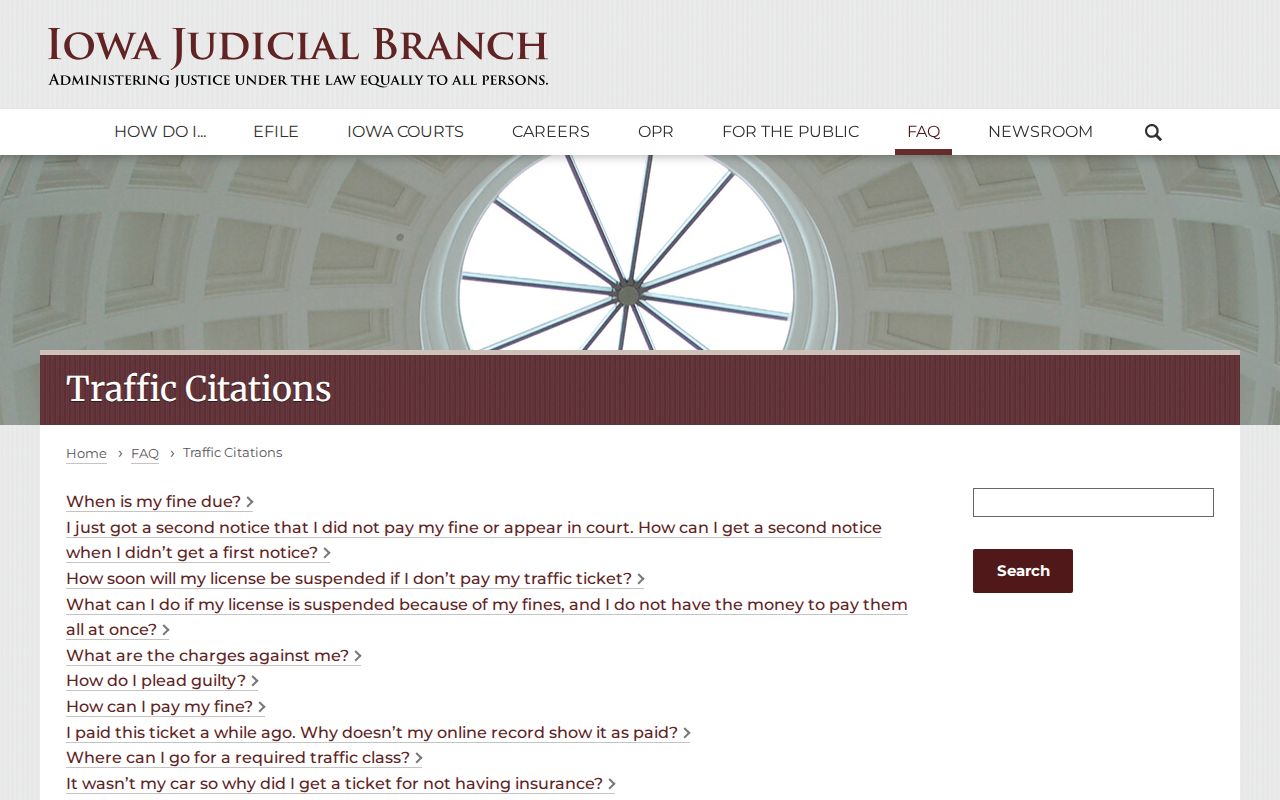
The FAQ anchors the inquiry in the court case itself. It offers no separate Hancock County traffic-warrant registry. Have the ticket, exact legal name, citation number, and any case ID ready before you call. Those identifiers cut down errors and let the clerk pull the correct public record without drifting into searches for unrelated people.
Checking a Hancock County Traffic Warrant
Open Iowa Courts Online. Use the citation-number search when you have the ticket in hand. A name with an exact date of birth, or a case ID, can also locate a public trial-court case in Hancock County. The case-ID mode asks for county and case type, keeps the 17-character identifier intact, and requires telling zero from the letter O.
- Search the citation number or exact case ID.
- Open the blue case ID and read public entries.
- Call the Clerk of Court at 641-923-2532.
- Ask which issuing agency controls enforcement.
- Confirm the required appearance, filing, or payment step.
Online results can lag in Hancock County. A new case may take one business day to show, while a citation can sit for up to fourteen days before it appears. City parking matters may never reach the county clerk, and old or restricted cases can be absent too. Name searches also fail when spelling, name order, or spacing differs, so try only supported corrections and then call the clerk. Treat a no-result screen as just that: it is not a court finding that no traffic warrant exists.
Hancock County Citation Search Fields
Iowa Courts Online is a public docket for Hancock County cases, not an active-warrant filter; its fields simply help locate the underlying matter.
| Search mode | Key input | Use | Limit |
|---|---|---|---|
| Citation | Ticket number | Scheduled violation or traffic matter | Filing can lag |
| Case ID | County, type, 17 characters | Known court case | Zero and O differ |
| Name | At least two last-name letters | Public cases for that spelling | Not warrant-only |
| Date of birth | Exact date and names | Narrow own-record match | Exact values required |
The percent sign is the documented name wildcard in Hancock County searches, and a first initial carries no period. Even a correct match still needs current confirmation from the clerk.
Inside a Traffic Warrant Record
The public docket may show enough to identify the citation and follow its procedural history in Hancock County. It does not guarantee that every warrant or service field appears on the free web view.
| Citation number | The number supplied by the court or officer, represented as CITATION-ID. |
|---|---|
| Case ID | The court identifier linking public filings. |
| Charge | The scheduled violation or other filed offense. |
| Dates | Filing, appearance, disposition, and payment entries when public. |
| Financial entries | Public fines, fees, and payments, subject to accuracy warnings. |
| Restricted fields | Bonds or service returns may require a public terminal or subscription. |
Read the docket as a case trail, nothing more. Ask the Hancock County clerk whether the court shows an unresolved appearance duty or any warrant-related action.
Hancock County Traffic FTA Process
FTA stands for failure to appear. The court issues the warrant, the clerk transfers it with the citation to the issuing agency, and a peace officer handles enforcement. That sequence is separate from the Iowa DOT process for unpaid court debt, and though both can grow out of one case, one does not prove the other. For Hancock County court status, contact the Clerk at 855 State Street, P.O. Box 70, Garner, Iowa 50438, 641-923-2532. For enforcement or custody routing, call the sheriff at 641-923-2621. Garner, Britt, and Kanawha have police departments, while the sheriff contracts patrol for Klemme, Goodell, Corwith, Woden, and Crystal Lake.
How to Pay or Lift a Traffic Warrant
Confirm the case before paying anything. The clerk can state the balance, the official channel, the court date, and whether payment covers only debt or also changes a pending court order. Iowa's official ePayment route takes major credit cards around the clock, and the Court Debt Payment Call Center is 515-348-4788. Hancock County has no local warrant payment form or standard recall fee.
Before paying: Ask the Hancock Clerk how payment affects the warrant and what proof confirms any recall, appearance, or satisfied court duty.
A payment receipt does not itself prove an enforcement database has updated. Keep it, and ask the Hancock County clerk which court entry will show completion. A lawyer may be worth it if a motion, appearance, bond issue, or arrest warrant remains open.
Traffic Warrants, FTA, and License Holds
The Iowa DOT nonpayment page lays out the separate license consequence a Hancock County court can trigger by reporting unpaid fines, penalties, surcharges, or costs.
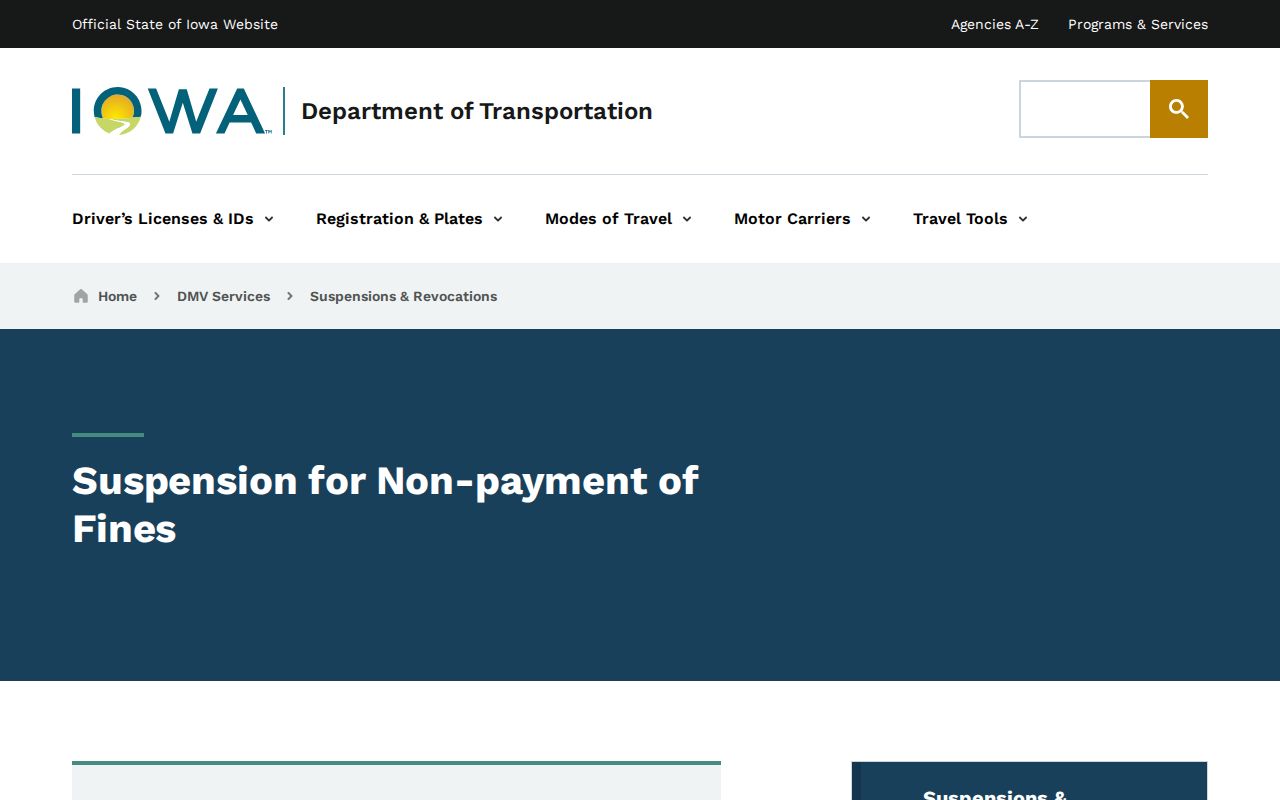
The DOT route can involve payment through the clerk, a License Reinstatement Program, or a County Attorney Payment Plan. The first payment goes to the clerk before any request to withdraw suspension. The driving record may not update at once.
| Issue | Who controls it | Needed confirmation |
|---|---|---|
| Traffic warrant | Court and issuing agency | Warrant status or recall |
| Court debt | Clerk and official payment system | Balance and receipt |
| License suspension | Iowa DOT after court notice | Reinstatement requirements |
Hancock County Traffic Payment Scams
The June 2026 Judicial Branch warning is direct: courts do not demand payment by text or phone, and officers do not collect court fines from anyone in Hancock County.
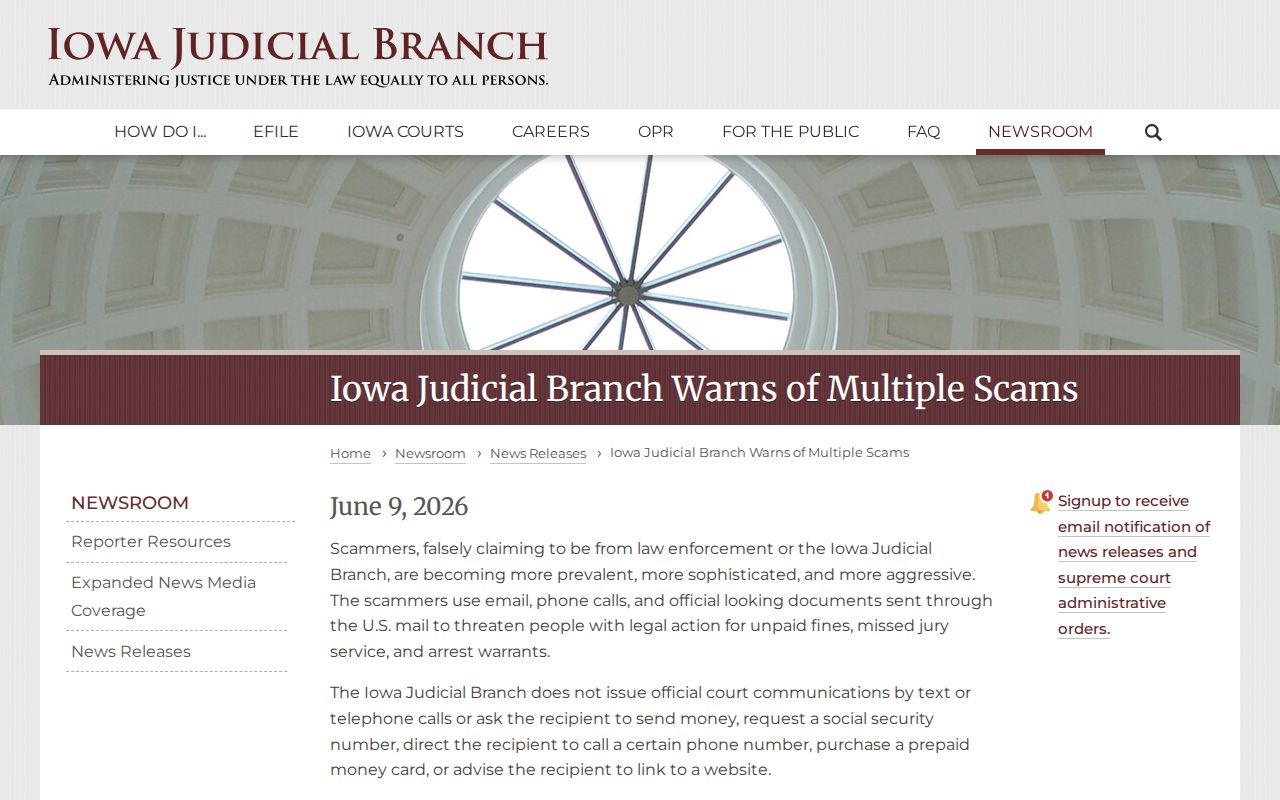
Scammers in Hancock County lean on a few predictable tricks: bitcoin, prepaid cards, Social Security demands, threats of instant arrest, and pressure to pay on some unofficial website. None of that is how a real court handles a traffic warrant. Hang up, open an official court page yourself, and call the Clerk at 641-923-2532 rather than any number the caller gives you. Ask whether a public case exists and what payment or appearance route fits it. A demand that names your traffic ticket is not automatically real.
Resolve a Hancock County Traffic Warrant
Start with the citation and the public docket, then confirm the current court entry with the clerk. From there, follow whatever instruction the court actually gave: appear, pay, file, hire an attorney, post bond, or surrender. The clerk routes questions but may not hand over restricted warrant paperwork, and the sheriff handles enforcement and custody without collecting court fines. Each office has a narrow lane, and each lane matters. The clerk explains the public case, the amount owed, the filing path, and the next court date. The issuing police agency or sheriff covers enforcement routing, while Iowa DOT controls a reported license suspension and its reinstatement requirements. Stretching one office's answer to cover another office's record invites trouble, because a court warrant, unpaid court debt, and a license consequence are three separate things. Hancock County publishes no traffic-warrant-only list, recall form, bond schedule, amnesty program, or walk-in surrender protocol, so treat any general claim filling those gaps with suspicion. If you need a public-record request, describe your own record by name, case ID, citation number, and date range; confidentiality still applies. The Hancock County municipal warrant explanation shows why city matters also route through Iowa District Court. Keep the ticket and every official receipt, and ask the clerk which docket entry confirms the appearance, payment, or other required act, plus whether any court step remains. If a suspension is already active, ask Iowa DOT what proof and reinstatement action it needs. A payment confirmation or a license change is not, by itself, proof that an arrest warrant has been recalled.