
Hancock County Arrest Warrants Explained
A complaint starts the machine. Under Iowa Code section 804.1, a complaint may go to a magistrate, and if the complaint plus supporting affidavits show probable cause, the magistrate issues an arrest warrant. Probable cause means a reasonable factual basis to believe an offense happened and that the named person committed it. The same statute lets a citation do the job in eligible cases. A citation just directs the person to appear. No initial custodial arrest is needed. Hancock County works inside Iowa's unified District Court, and the public sources name no separate county criminal court or sheriff arrest warrant list. Cases live with the Iowa District Court in Hancock County. Enforcement belongs to the sheriff and other peace officers, which is why court confirmation and law-enforcement confirmation serve different needs.
Hancock County Warrant Privacy
Nothing on a blank search settles the question. A missing public record in Hancock County is not proof that no arrest warrant exists. Under Iowa Code section 804.29, information filed to secure an arrest warrant stays confidential until arrest and return of the warrant, or the defendant's initial appearance, subject to exceptions. Judicial Branch guidance also marks applications, orders, and some cases with outstanding warrants as restricted before service.
Key rule: Use a public docket result as a lead, then ask the clerk or issuing agency to confirm what may lawfully be disclosed.
Juvenile cases carry added limits in Hancock County. A public-record request cannot turn restricted material public, so parties, counsel, and authorized people should use the court's access process.
Inside a Hancock County Arrest Warrant
Iowa Court Rule 2.36 Form 7 is an official example of an arrest warrant issued after failure to appear for sentencing. It shows which identifiers tie an order to the right case. It is a model form, though. No searchable Hancock County roster comes with it.
| Case identifier | The criminal case number, shown here only as CASE-ID. |
|---|---|
| Named person | The defendant-name field identifies who the order concerns. |
| Basis | The offense, statute, complaint, or probable-cause record tied to issuance. |
| Court command | Direction to a peace officer to arrest and bring the person before court. |
| Authorization | The date and judge or clerk signature. |
| Release terms | Bail information is case-specific and may not appear on the free web view. |
Public docket entries in Hancock County can show charges, filings, dispositions, fines, and payments. Bonds and service returns may sit behind a public terminal or subscription, and the clerk controls the official record.
Hancock County Arrest Warrant Check
Begin at Iowa Courts Online, the public trial-court docket search the sheriff links to. Name, exact date-of-birth, case-ID, and citation-number modes exist, but there is no arrest-warrant filter. Type at least two letters in the last-name box, skip the period after a first initial, and use the percent sign as the documented wildcard for a Hancock County search.
- Search with the best known identifier.
- Open the blue case ID and read public entries.
- Call the Clerk at 641-923-2532 for court status.
- Call the sheriff at 641-923-2621 for enforcement or custody routing.
- Ask counsel to handle restricted or complex issues.
Timing matters. A new case can take one business day to appear, and citations can take fourteen days. Older cases may require the clerk. The IOWA System links justice agencies with NCIC, but it is no public portal for a Hancock County warrant check.
Serving Arrest Warrants in Hancock County
A warrant commands a peace officer to take the named person into custody and bring that person before court. Serving it may fall to the sheriff, Garner Police, Britt Police, Kanawha Police, or another proper agency. The sheriff also contracts patrol for Klemme, Goodell, Corwith, Woden, and Crystal Lake. The agency that opened a case need not be the one that serves the warrant. After arrest, section 804.21 covers access to a magistrate, release, bail, and recognizance. Terms depend on the case. Hancock County has published no bond schedule, surrender form, or bond-window instructions, so call before traveling. Since 2018, Hancock inmates have generally been housed at Winnebago County Jail, with temporary Hancock custody for court appearances.
Hancock County Warrant Updates
Status can turn on service and return records. The Iowa Supreme Court orders page records 2025 amendments on electronic criminal procedure, paper filing of warrants and emergency applications, and a criminal return-of-service form. Check it for changes touching a Hancock County warrant.
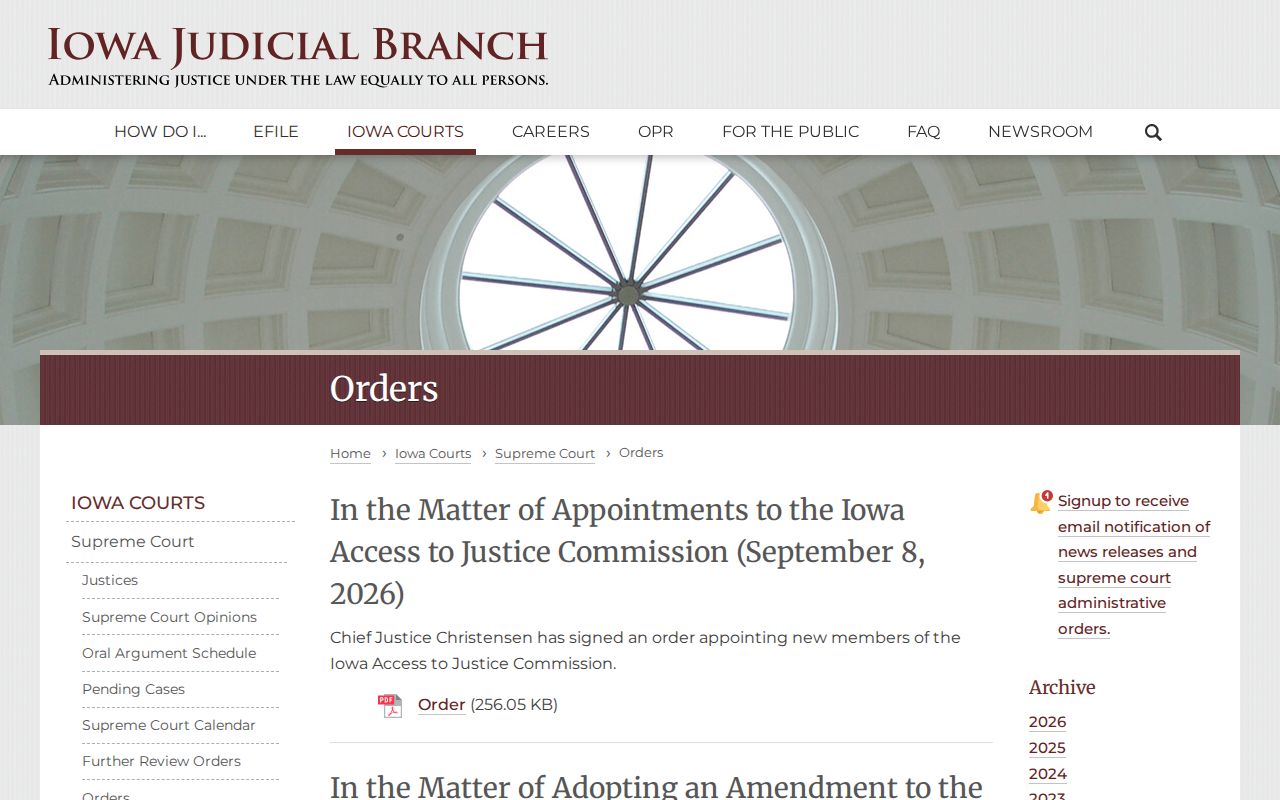
That order list shows why current confirmation matters. A web docket may not reduce every stage to a simple active or cleared label. Keep your filing, appearance, and payment proof in Hancock County, then ask how completion will be recorded.
Comparing Arrest, Summons, and Bench Warrants
An arrest warrant, a summons, and a bench warrant are distinct things. "Bench warrant" is a practical label for an order tied to missed court or noncompliance. Hancock County sources publish no local classification table.
| Feature | Arrest warrant | Summons or citation | Bench or FTA warrant |
|---|---|---|---|
| Direction | Officer arrests | Person appears | Officer brings person to court |
| Basis | Complaint and probable cause | Eligible noncustodial process | Missed court duty |
| Response | Confirm and seek counsel | Appear by stated date | Ask how to address failure |
| Limit | May be restricted | May appear publicly | Needs clerk confirmation |
A search warrant is a different animal. Section 808.3 authorizes a search on a sworn application, and it says nothing about a person's arrest status in Hancock County.
Hancock County Warrant Custodians
The Clerk of Court sits at 855 State Street, P.O. Box 70, Garner, Iowa 50438; call 641-923-2532 or write countyclerk.hancock@iowacourts.gov. Ask about a case ID, date, filing, payment, or public FTA action. The sheriff is at 875 State Street, Garner, 641-923-2621. The official elected-officials directory identifies the sheriff and county attorney offices for Hancock County.
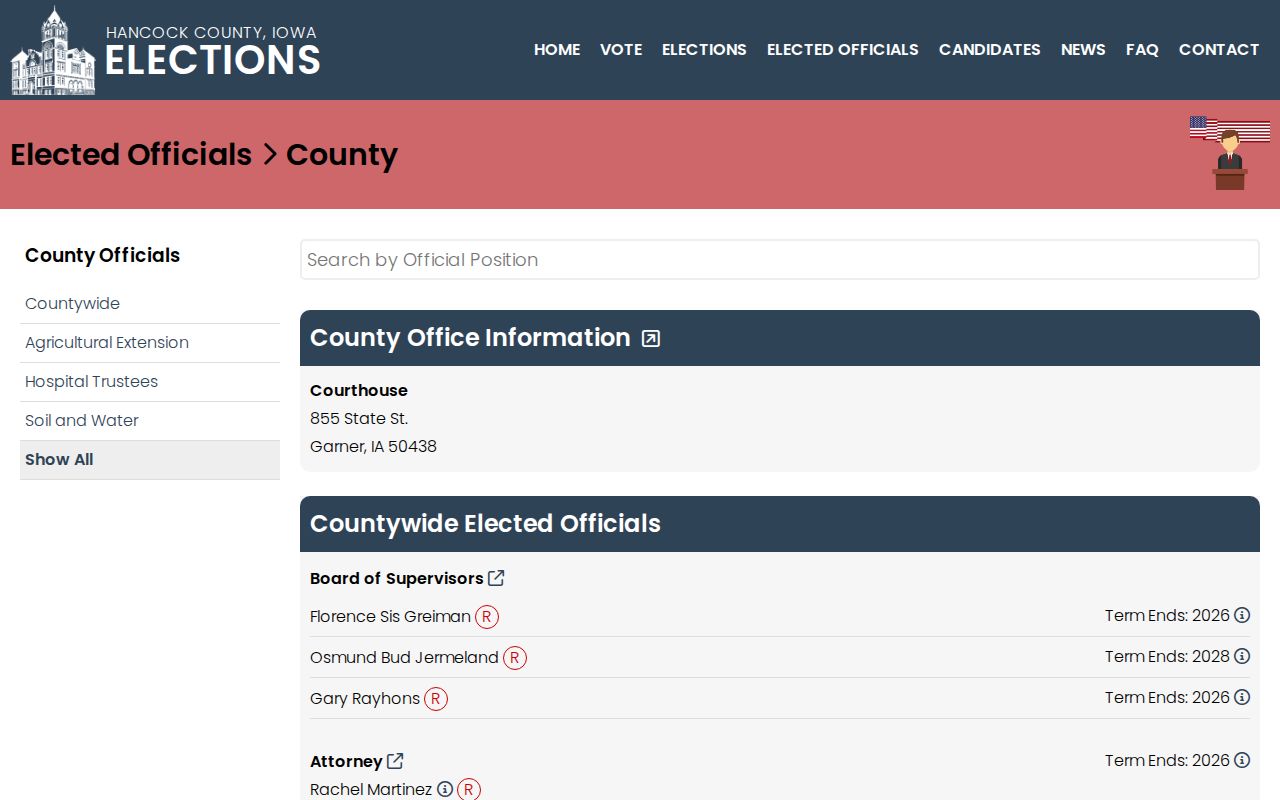
The directory confirms public-office context only. For warrant status in Hancock County, use the clerk and sheriff channels instead.
Hancock County Federal Warrant Boundary
A federal matter does not become a Hancock County arrest warrant record just because a county resident is involved. Hancock County lies in the Northern District of Iowa. PACER is the federal docket system. The federal clerk or counsel is the court route, and the U.S. Marshals Service supplies enforcement context. The PACER pricing page explains federal docket charges and its quarterly waiver.
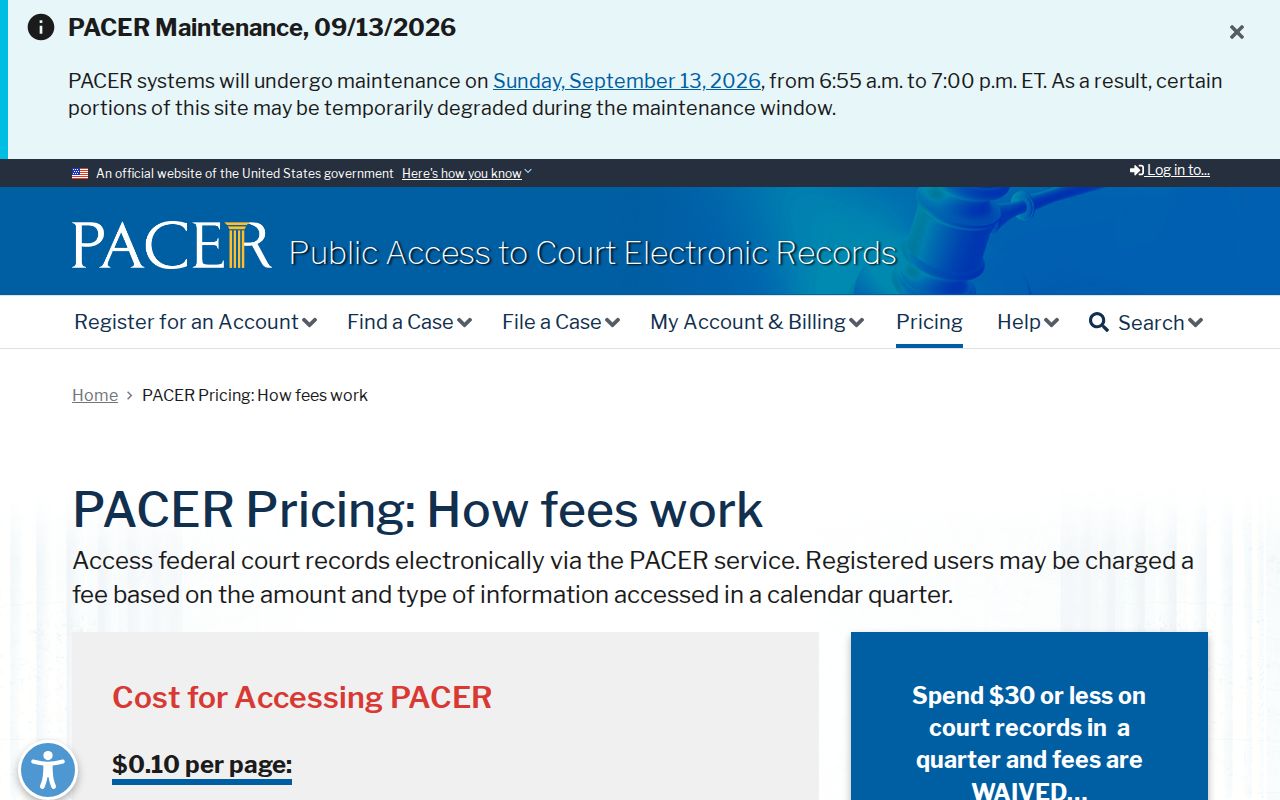
Those are federal access fees, not a Hancock County warrant fee, bond, or recall charge. PACER can also omit sealed records.
If There's an Arrest Warrant for You
Start with the clerk, not with guesswork. Give the exact name and any case ID you have. Then ask which step actually applies: a court appearance, a payment, an agency contact, or a lawyer. If surrender or custody instructions are required, the sheriff is the office to call. Hancock County publishes no recall form, no walk-in process, and no standard bond amount. When the document you need is not online, a focused public-record request is the fallback. Iowa procedure allows the request to be oral or written, made to the custodian during regular hours. Describe the record well enough to find it: legal name, a case identifier, and a date range. A complicated request may have to be in writing, and the custodian may point court-proceeding material to Iowa Courts Online, eFile, or a public terminal. Copying, postage, retrieval, review, redaction, or programming costs can apply, though Hancock County sets no fixed criminal-warrant request fee. Confidentiality rules still shield unserved warrant material.
Important: Speak with an attorney before surrender; appearance, bond, recognizance, or a recall motion must match the actual case.
Recall means the court pulls the warrant back. Quash means it sets the order aside. Neither happens on its own, and paying alone proves neither one. The Hancock County warrant records overview lays out the wider resolution route. Hang up on urgent phone or text demands. Iowa courts never demand bitcoin, prepaid cards, Social Security numbers, or payment at an unofficial site. Keep copies of everything: a filed motion, appearance record, bond receipt, payment receipt, and any written clerk instruction. Ask which official docket entry will show the required act was done. A gap can sit between court action and an agency update in Hancock County, so pair each receipt with current confirmation rather than treating it as proof enforcement has ended.