
Hancock County Municipal Court Warrants
Iowa handles what other states call a municipal warrant differently. The old city criminal courts are gone, so municipal infractions and lower-level matters move into Iowa District Court, where the clerk keeps the case record. Hancock County runs no separate municipal criminal court, no warrant counter, and no public city warrant database. A city citation or police matter can still end up in court, and a willful failure to appear can bring a warrant. The city agency can explain its own role, but the district-court docket and the Hancock County Clerk hold the real court trail. That is why a general city payment page should never stand in for a warrant lookup.
Iowa Unified Courts Shape Warrants
The Iowa courts history page traces the 1973 Unified Trial Court Act, which built the Iowa District Court and closed hundreds of justice-of-the-peace, mayor's, municipal, and police courts.
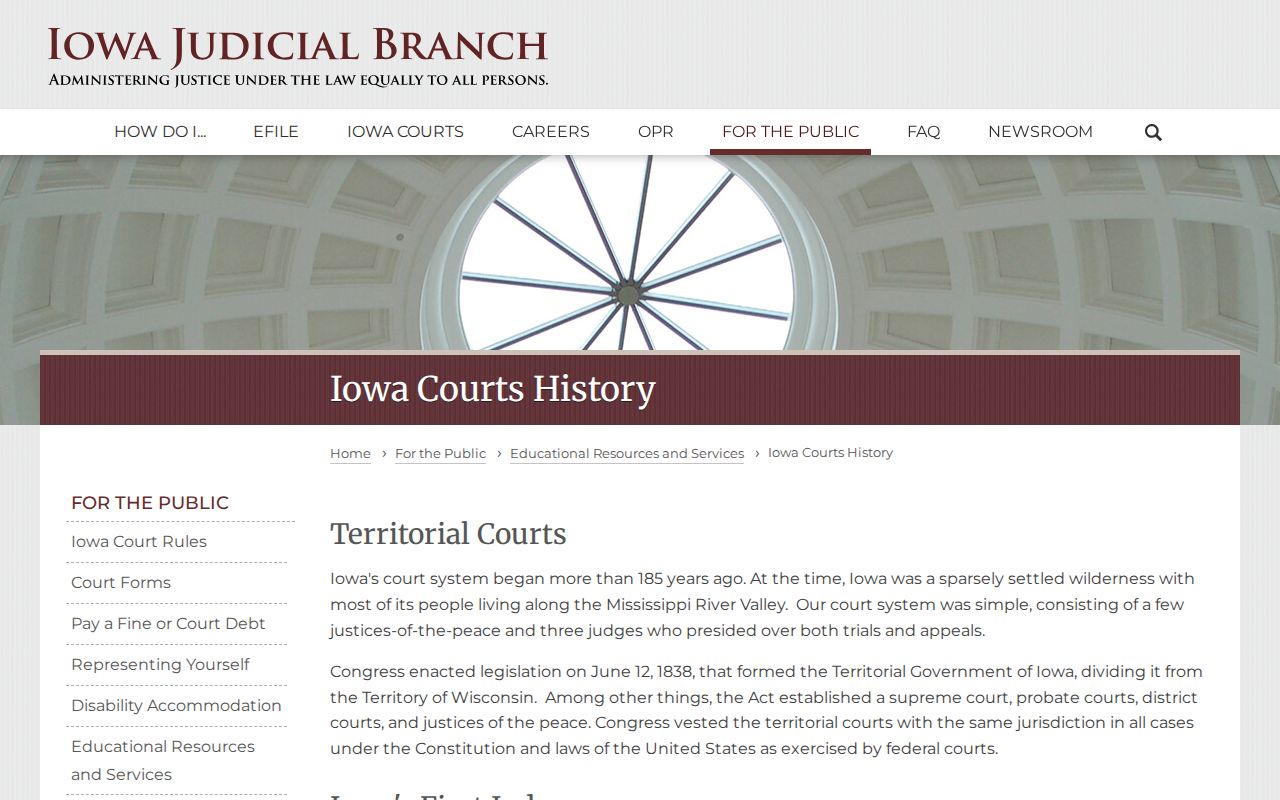
That history explains why a Hancock County city case today routes through the district-court clerk, not a municipal portal. District associate judges handle scheduled violations, simple misdemeanors, county and municipal infractions, and other listed matters. The case type controls.
Hancock County Cities With Municipal Courts
Garner, Britt, Kanawha, Klemme, and Corwith are the five Hancock County communities here. Their police routes differ. None operates its own municipal warrant court.
| City | Local route | Court record | Contact |
|---|---|---|---|
| Garner | Garner Police | Hancock District Court | 641-923-2621 dispatch |
| Britt | Britt Police | Hancock District Court | 641-843-3822 |
| Kanawha | Police or City Hall routing | Hancock District Court | 641-762-3632 |
| Klemme | Contract sheriff patrol | Hancock District Court | 641-587-2018 city routing |
| Corwith | Contract sheriff patrol | Hancock District Court | 515-583-2342 city routing |
City-hall numbers help you find the right local contact. They do not verify warrants. For court status, the Hancock County clerk is the source.
Hancock County Police Coverage
Garner, Britt, and Kanawha run their own police departments. The Hancock County Sheriff contracts service for Klemme, Goodell, Corwith, Woden, and Crystal Lake. A city officer may write the citation while a county deputy later handles enforcement. Boundaries create no separate public warrant databases, so a city police page alone tells you nothing about warrant status. For a case ID, appearance, filing, payment, or docket issue, call the Hancock County clerk at 641-923-2532. For county enforcement or custody questions, call the sheriff at 641-923-2621. On a city-police matter, ask the clerk or dispatch which agency owns the next step.
Checking a Hancock County Municipal Warrant
Start with Iowa Courts Online. It searches public trial-court dockets by name, exact date of birth, case ID, or citation number, with no municipal-warrant-only filter. Type at least two letters in the last-name field. Drop the period after a first initial, and use the documented percent-sign wildcard only when you must.
- Search the known citation or 17-character case ID.
- Review public entries through the blue case link.
- Call the Hancock Clerk for current court status.
- Ask which city agency or sheriff unit handles enforcement.
- Follow only official appearance, filing, or payment instructions.
A new Hancock County case may take one business day to post, and citations can need fourteen days. City parking matters may never reach the county clerk.
Inside a Municipal Court Warrant
What you can see publicly is usually the district-court case, not a separate city warrant card. Read the fields tying the local event to the court action.
| Case ID | The Iowa court identifier, represented here as CASE-ID. |
|---|---|
| Case type | The filed infraction, scheduled violation, misdemeanor, or other matter. |
| Party | The person named in the court case. |
| Filings | Public docket events and court action. |
| Financial record | Public fines, fees, and payments, subject to warnings. |
| Restricted detail | Unserved warrant, bond, or service material may not be freely visible. |
The clerk holds the official record. A city receipt or payment screen alone cannot prove a Hancock County warrant was recalled.
Hancock County Municipal Warrant Gaps
Hancock County posts no city warrant list, municipal court portal, warrant-status form, recall form, amnesty day, or surrender appointment. The sheriff also publishes no full active-warrant index, so absence from that site proves nothing. A city payment page does not show whether enforcement action exists.
Myth and fact: A missing city or sheriff list is an access limit, not an official finding that the court has issued no warrant.
Ask the clerk to name the public case and its custodian. If documents stay restricted, a party or attorney in Hancock County must use the court's authorized process.
Hancock County Civil Fee Warning
The Hancock Sheriff Civil Division fee schedule includes a $35 line labeled “warrant.”
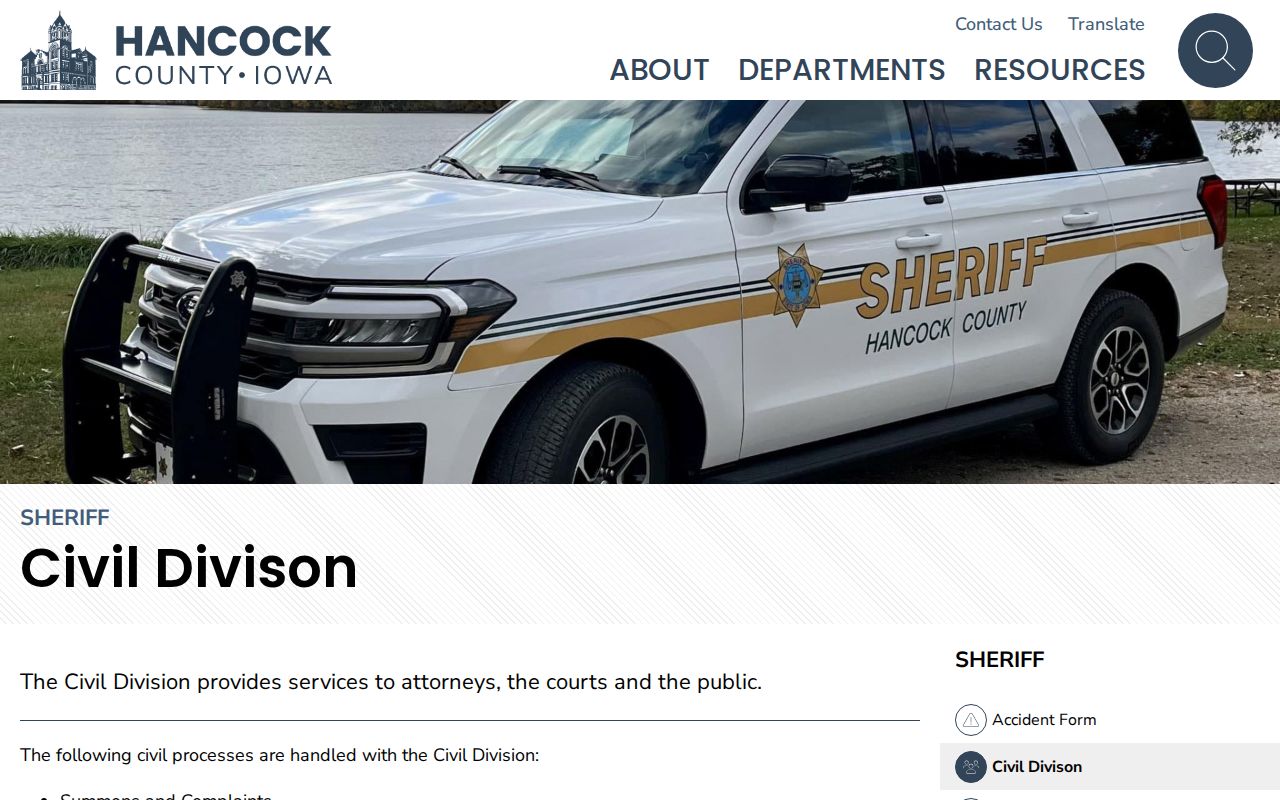
The schedule around that line covers civil process, not criminal warrants. It is no warrant lookup fee, bond, fine, or recall payment. The Civil Division handles summonses, subpoenas, writs, levies, and sheriff sales. Route a criminal failure-to-appear or city citation question to the district-court clerk, then to the right enforcement agency in Hancock County.
Hancock County Municipal Warrant Privacy
Iowa Code section 804.29 can keep papers filed to secure an arrest warrant confidential until arrest and return or initial appearance, subject to exceptions. Judicial Branch guidance also restricts warrant applications, outstanding-warrant case material, search-warrant records before service, and juvenile categories. Iowa Code chapter 22 lets you request records from the proper custodian, but it does not override those limits. A tight request should give your legal name, the case ID or citation, the record type, and a date range. The custodian may send you to Iowa Courts Online, eFile, or a public terminal instead. Fees can cover copies, postage, and staff work, though Hancock County sets no fixed warrant-request fee.
How to Resolve a Municipal Court Warrant
An Iowa city enforces its ordinances through the district court. Iowa Code section 364.22 governs municipal infractions. There is no separate city warrant system. A Hancock County city ticket becomes a warrant only through the court. Ask the clerk for the exact case type. Citation, arrest warrant, bench warrant, and failure to appear describe different events. The label tells you what step comes next. Start with the Clerk of Court at 855 State Street, P.O. Box 70, Garner, Iowa 50438, or call 641-923-2532. Ask which step applies. An appearance, a filing, an official payment, an attorney motion, or a bond could each be the answer. The Hancock County sheriff's office at 875 State Street, reachable at 641-923-2621, handles county enforcement routing. In Hancock County, a city department may also be involved, depending on where the case began. Prefer paper? A public-record request goes to whichever office holds the record. Verbal requests can work; complex ones may need writing. Give enough detail to identify your own case. The custodian should say when no responsive record exists or explain any denial. Fees may cover copies, postage, staff review, retrieval, redaction, or programming. Hancock County posts no fixed fee or turnaround for a municipal-warrant records request. No request overrides restricted-warrant or juvenile rules.
Confirm first: Paying a Hancock municipal warrant does not by itself recall it, and no warrant payment or surrender form is posted; check with the court.
Hold on to your receipts and any instructions the court gives you. Then ask the clerk directly how completion will show up in the official record. Hang up on anyone demanding prepaid cards, bitcoin, Social Security numbers, or payment through an unofficial site; that is a scam, not the court. Iowa officers never collect court fines. For citation details, use the Hancock County traffic warrant search. The Britt website's general payment area is not a warrant tool, and the same caution fits any city payment link. Before you pay, confirm the case number, the amount, and the legal effect with the Hancock Clerk. A city receipt can settle one municipal charge while a separate court appearance or enforcement issue in Hancock County still stands unresolved.