
Checking for a Warrant in Hancock County
Three official contacts, in order, get it done. Iowa Courts Online opens the public trial-court docket. The Hancock County Clerk of Court then confirms filings, hearing dates, balances, and where the case belongs. The Hancock County Sheriff's Office or dispatch takes enforcement, custody, and surrender questions. The county publishes no public active-warrant index. Have an exact legal name ready, plus any birth date, case ID, or citation number tied to the matter. Guard that data and use it only lawfully.
- Search Iowa Courts Online for the public case.
- Open the blue case ID and note relevant entries.
- Call the clerk at 641-923-2532 to verify status.
- Call the sheriff at 641-923-2621 for enforcement or custody routing.
- Consult counsel before an appearance when arrest is possible.
Hancock County Uses a Verified Route
The Hancock County Sheriff's official page names the county's law-enforcement contact. It also sketches the office's patrol, communications, and jail duties.
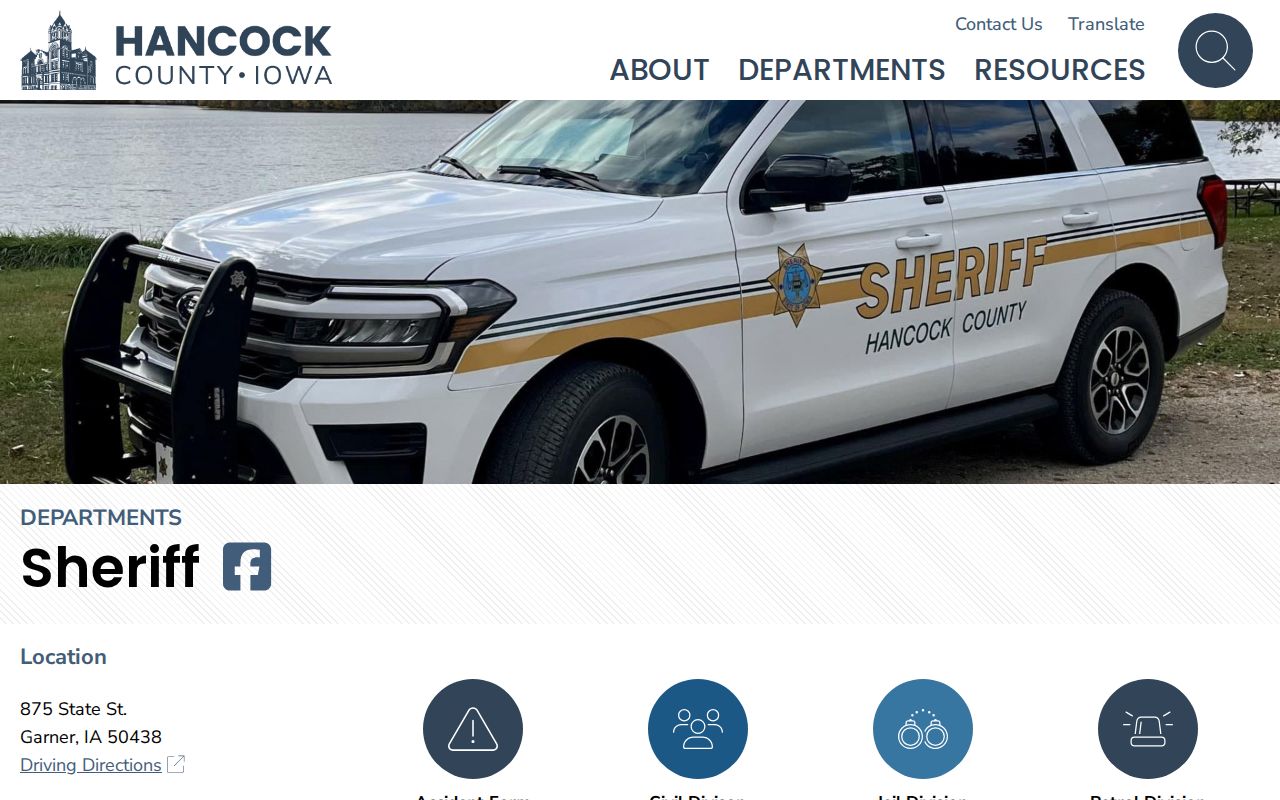
The Hancock County sheriff operates from 875 State Street, Garner, Iowa 50438. Regular office hours are Monday through Friday, 8 a.m. to 4 p.m., with patrol, communications, and jail functions running around the clock. Call and ask which office owns the record and what official step comes next. Do not expect confidential warrant paperwork by phone. The sheriff cannot change a court order.
Hancock County Warrant Types
Iowa sources sort warrants by purpose and origin. In any Hancock County case, the court record fixes the label.
| Type | How it arises | Authority |
|---|---|---|
| Arrest warrant | A complaint and supporting facts establish probable cause. | Magistrate or court |
| Bench or FTA warrant | A person fails to appear or obey a court command. | Court handling the case |
| Citation-related warrant | Willful nonappearance follows a citation. | Court under Iowa law |
| Search warrant | A sworn application shows probable cause to search a person, place, or item. | Judicial officer |
Search warrants authorize a search, not an arrest listing. Hancock County case files use the court's own wording, so a term like capias pro fine should not replace the official label.
Hancock County Docket Is Not a List
The Sheriff Resources page sends the public to Iowa Courts Online. That docket is the clearest official online start for Hancock County cases.
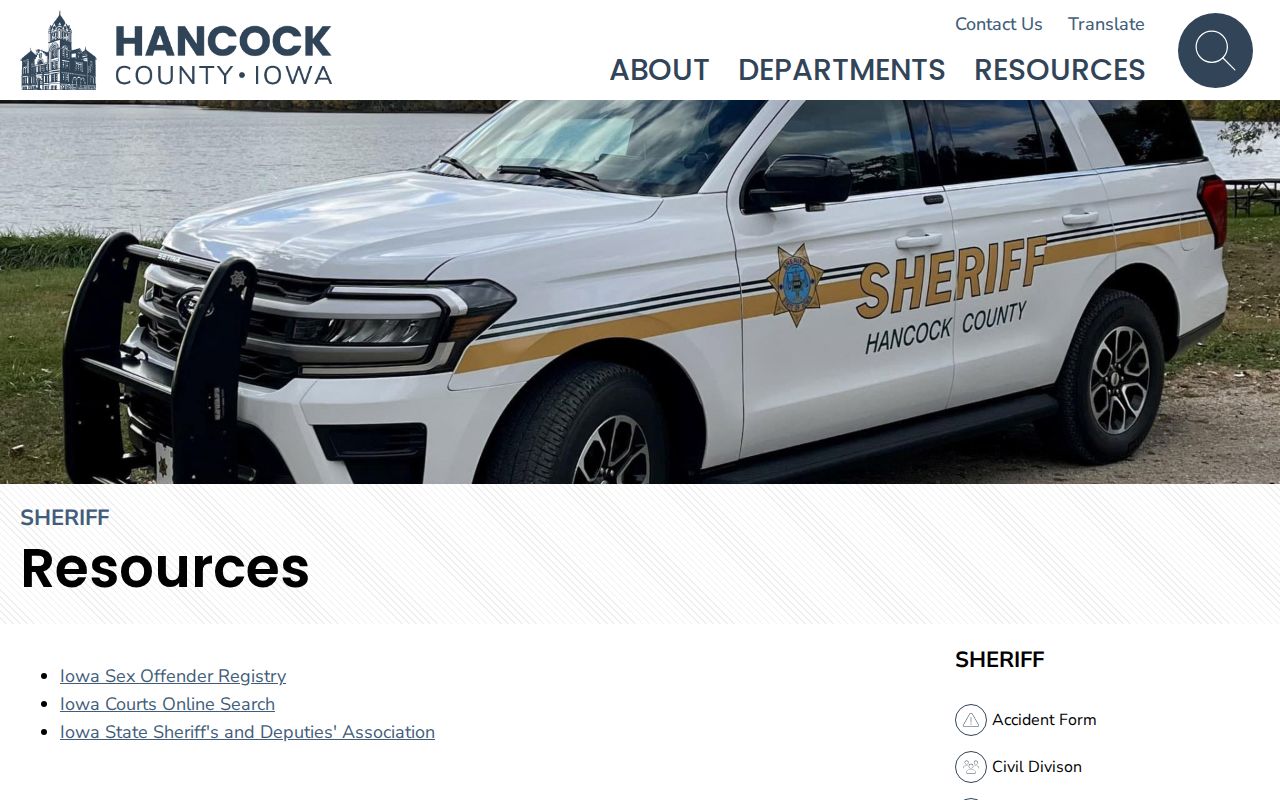
Iowa Courts Online takes a name, exact birth date, case ID, or citation number. No warrant-only filter exists. Public entries can show case titles, parties, charges, filings, dispositions, fines, fees, and payments. Bonds and service returns often need more. A public terminal or subscription may be required. Only the docket's public slice shows. So it feeds a Hancock County warrant check with clues, never a final active-warrant answer.
Inside a Hancock County Warrant Record
Court files and agency records carry different fields. Hancock County publishes no public warrant-result format, so trust only the fields the clerk or agency confirms.
| Case ID | The 17-character court identifier used for precise case routing. |
|---|---|
| Subject name | The name on the public case, which should be checked for exact identity. |
| Charge or offense | The alleged offense or case basis, not proof of present warrant status alone. |
| Issuing court | The court responsible for the order and its later disposition. |
| Bond information | May be limited online and must be confirmed for the current case. |
| Service status | May show whether process was served or returned when public access permits. |
A copied screen can go stale fast. Ask the Hancock County clerk or issuing agency whether the warrant was served, returned, recalled, or still active.
Why Hancock County Searches Miss Records
A blank result is not always a blank record. A new case may take one business day to appear, and a citation can take up to fourteen days. City parking cases may not reach the county clerk. Input errors block matches too. A misspelling, swapped name order, extra space, wrong case ID, older case, or confidential file will hide a match in a Hancock County search.
Key limit: a blank docket search is not proof that no Hancock County warrant exists; verify with the clerk or issuing agency.
The help guide says later case updates post in real time. That speed does not make every warrant detail public. For a Hancock County search, use an exact legal name first, then a known DOB, case ID, or citation number.
Issuing and Serving Warrants in Hancock County
Iowa's unified trial-court structure puts warrant power in the Iowa District Court in Hancock County. The Clerk of Court keeps the official file. The sheriff and other peace officers do the serving. Custody matters land with them as well.
Hancock County Clerk of Court
855 State Street, P.O. Box 70
Garner, IA 50438
641-923-2532
Both offices sit near one another in Garner. In Hancock County, filings and schedules belong to the clerk, while enforcement and custody belong to the sheriff.
Hancock County Custody Has Two Places
Custody in Hancock County runs through two places. The Jail Division reports that Hancock County inmates have generally been housed at the Winnebago County Jail in Forest City since 2018. Hancock holds inmates briefly for court appearances only. Call first, before any trip. The official Hancock County roster is a custody snapshot, not a warrant index. Entries list custody date and time, subject name, arresting agency, charge, release information, and bond-related information. It does not include every unserved warrant or every historical arrest. The sheriff's main line is 641-923-2621. The jail page also gives 641-924-2148 for jail questions.
If You Have a Warrant in Hancock County
Confirm the case with the Hancock County clerk first. Ask which court issued the warrant, what entry is current, and which official process applies. Then talk to a lawyer. Counsel can shape a court appearance, voluntary surrender, bond, or a request to recall the warrant. Recall means the court withdraws the warrant. Payment by itself never proves a recall.
Important: obtain legal advice and official surrender directions before appearing in person when a confirmed warrant could result in arrest.
Iowa Code section 804.21 guards prompt magistrate access after an arrest. Bail, release, or recognizance may follow. Recognizance is release on a promise to appear. Outcomes in a Hancock County case depend on the actual order and judicial decision.
Hancock County Payment Scam Warning
Hancock County residents got a blunt warning from the Iowa Judicial Branch in June 2026. Courts never demand money by phone or text. Nor do they seek Social Security numbers that way. Bitcoin, prepaid cards, or a specific unofficial payment site will never be required either. Officers do not collect court fines. Hang up if a caller threatens immediate arrest over payment. Instead, open the official Judicial Branch site yourself or call the Hancock clerk at its published number. Real payment routes run through the clerk, the official secure ePayment service, and the Court Debt Payment Call Center. Confirm the case and amount first. A receipt proves a payment, not that a related warrant or enforcement record was recalled.
Hancock County Warrant Records and Public Access
Hancock County warrant records sit inside Iowa's public-records law, Iowa Code chapter 22, though confidentiality rules still apply. Ask the right custodian. Requests may be verbal or written. Describe the record well enough to identify it, and expect possible fees for copies, postage, retrieval, review, redaction, or programming.
Key rules:
Iowa Code section 804.29 restricts information filed to secure an unserved arrest warrant.
Iowa Code section 805.5 provides the warrant path for willful failure to appear on a citation.
Iowa Code section 808.3 governs sworn search-warrant applications.
Juvenile, sealed, and other confidential records remain restricted even after a well-framed request.
Hancock County's City Coverage Map
Garner, Britt, and Kanawha each run their own police departments. The Hancock County sheriff contracts coverage for Klemme, Goodell, Corwith, Woden, and Crystal Lake. None of those city pages posts a warrant portal. A city officer may still make an arrest. But the unified District Court clerk holds the court records. Iowa's 1973 Unified Trial Court Act swept away the old justice-of-the-peace, mayor, municipal, and police courts. Municipal infractions generally route to the district court clerk now. A city payment page is not a municipal warrant database. Start locally for agency context in Hancock County, then follow the same clerk and sheriff confirmation chain used countywide.
Hancock County Records Request Path
When the public docket falls short, contact the custodian who holds the record. Requests may be verbal or written. The Judicial Branch allows both during regular hours. Complex requests may need writing. A custodian responds promptly or as soon as practicable, states when no responsive record exists, and explains any denial. Court-proceeding requests may go through Iowa Courts Online, eFile, or a public terminal. Hancock County posts no fixed warrant-request fee or guaranteed response time. The State Court Administrator offers an administrative contest route for court-record disputes. It does not replace the local custodian, nor does it lift the restriction on unserved arrest-warrant information. So build a narrow request. Name the case, the date range, the record type, and the known court rather than every file about a person. Narrow terms help the custodian locate public material. They also make it easier to estimate a charge. If a record is withheld, ask the legal reason and whether a redacted copy or public docket entry exists; keep the response with your request for later verification in Hancock County.
Hancock County Warrants by City
The five city profiles follow the largest communities in the sheriff's eight-community service map, ranked by 2020 Census population. Each keeps its local police or contracted sheriff coverage in view. Court status still routes to the Hancock clerk.
None of the five cities posts its own public warrant application or search tool. Verify each case through the Hancock County clerk and the responsible agency. Garner serves as the Hancock County seat and the site of both the courthouse and the Law Enforcement Center. Britt and Kanawha residents often meet city police first. Public court-file questions still belong with the Hancock County clerk. Klemme and Corwith rely on contracted sheriff coverage. Those differences affect who may serve an order, not which public docket to search. Garner police route nonemergency calls through Hancock County dispatch, a clear case of overlapping city and county roles. Britt keeps its own police contact. Kanawha publishes city-hall details. Neither city publishes a warrant search. In sheriff-covered towns the enforcement route is clearer, but the court record still sits with the district court clerk. Always ask whether your question concerns a docket, an active order, or present custody before picking an office.
Population rank explains why these five communities get profiles. It does not change access rights or warrant procedure. Iowa law and court confidentiality rules apply across all of Hancock County. A smaller town's resident follows the same verified chain. Start with the public docket, confirm with the clerk, and use sheriff or city police only for the enforcement question they can answer. An officer contact, a court notice, a docket entry, and a jail roster each answer a different question. Note the case identifier, date, and agency on official papers, then use a number published by the county, city, or Judicial Branch. That simple check cuts the risk of paying a scammer or driving to the wrong office.